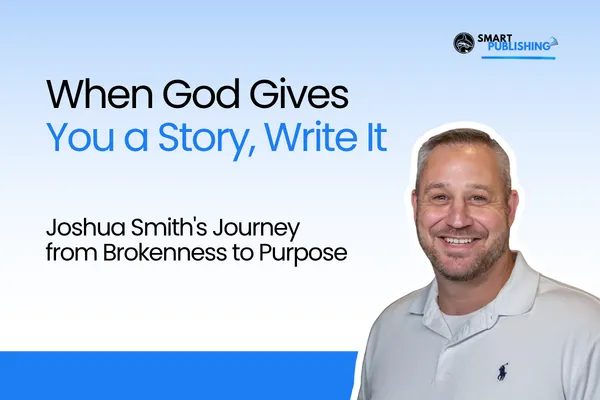
When God Gives You a Story, Write It: Joshua Smith's Journey from Brokenness to Purpose
When God Gives You a Story, Write It: Joshua Smith's Journey from Brokenness to Purpose
Smart Publishing Impact Series – Episode 67
Many people feel a quiet prompting to write a book.
For some, the idea surfaces during a difficult season of life. Others recognize it after years of experience, when they realize the lessons they've learned could help someone else. Yet despite sensing that calling, many never begin. Questions about where to start, whether anyone would read it, or whether they are qualified often keep the manuscript from ever being written.
Joshua Smith's story offers a different perspective.
In Episode 67 of the Smart Publishing Impact Series, Joshua shares how an unexpected moment in the middle of the night became the beginning of a journey that would eventually lead to his first book, When He Reigns, He Rains. His experience illustrates that writing a book is often about far more than documenting information. Sometimes, the writing process becomes part of the transformation itself.
A Calling Often Begins Before We Feel Ready
Joshua did not begin writing because he believed he had everything figured out.
When the idea for his book first came to him, his life was marked by significant personal struggles. His marriage was falling apart, he was battling addiction, and many areas of his life felt unstable. During that season, he woke around two o'clock in the morning with what he describes as a clear sense that God was calling him to write a book. Along with the title came an outline and a message that would eventually become the foundation of his manuscript.
At the time, he questioned why such a calling would come when his own life seemed so far from the message he would eventually write about.
Over the years that followed, Joshua realized that he was living through many of the very experiences outlined that night. The struggles, setbacks, victories, and moments of growth gradually became the stories that would give the book its depth and authenticity.
His experience highlights an important truth for aspiring authors: a calling to write does not always arrive after every lesson has been learned. Sometimes the writing journey unfolds alongside the personal journey itself.
Personal Stories Create Powerful Connections
Throughout the interview, Renee emphasized one of the strongest elements of Joshua's manuscript: his willingness to tell the truth about his own life.
Many nonfiction authors focus primarily on teaching concepts or explaining ideas. While valuable information has its place, readers often connect most deeply with stories that demonstrate those ideas through lived experience.
Joshua intentionally built his book around themes such as fear, shame, grace, mercy, obedience, and forgiveness. Each chapter combines biblical principles with personal experiences that illustrate how those truths played out in his own life. Rather than presenting himself as someone who had mastered every challenge, he chose to write from a place of honesty about both his failures and his growth.
That approach makes the message more accessible because readers can see themselves within the journey. Personal stories create emotional connection in ways that abstract teaching rarely accomplishes on its own.
Authors frequently wonder how much of themselves they should include in their books. Joshua's experience demonstrates that vulnerability, when shared with wisdom and purpose, often becomes one of the most meaningful parts of a manuscript.
Every Book Begins with an Organizing Framework
One question many first-time authors ask is how to move from a general idea to a structured manuscript.
Joshua described keeping the process intentionally simple. Rather than trying to organize dozens of disconnected thoughts, he identified the major themes that shaped his testimony. Those themes became the framework for the book, allowing individual stories and biblical applications to fit naturally within each chapter.
This principle applies far beyond memoirs or faith-based books.
Strong nonfiction books often begin by identifying the central ideas the author wants readers to understand. Once those themes are clear, supporting stories, examples, and practical lessons become much easier to organize.
Many aspiring authors become overwhelmed because they attempt to write everything they know all at once. Building a clear chapter structure around major themes creates a roadmap that makes the writing process significantly more manageable.
Publishing Involves More Than Writing
Like many first-time authors, Joshua initially believed the manuscript represented the largest challenge.
Once the writing was complete, however, he quickly discovered the many additional components involved in professional publishing.
Editing, cover design, formatting, typography, printing specifications, marketing, launch planning, podcast interviews, and distribution all require specialized knowledge. The process revealed an entirely new side of publishing that he had never previously considered.
His experience reflects something Smart Publishing often discusses with aspiring authors.
Writing the manuscript is an essential milestone, but publication itself involves numerous moving parts that work together to create a professional final product. Authors who understand this early are often better prepared to make thoughtful decisions about how they want to publish.
Why Professional Publishing Matters
During the conversation, Renee asked Joshua why he chose to work with a publishing company instead of navigating the process independently.
His answer centered on stewardship.
Joshua explained that if God had entrusted him with this message, he wanted to give it every opportunity to reach readers effectively. Recognizing that publishing was outside his professional expertise, he chose to partner with specialists who understood the process rather than attempting to learn every aspect himself.
His reasoning reflects a broader principle that extends beyond publishing.
People regularly seek experts for professions outside their own experience. Construction professionals consult attorneys. Business owners hire accountants. Athletes work with coaches.
Publishing follows the same pattern.
Professional guidance allows authors to focus their attention on the message while experienced teams manage the technical aspects that contribute to a successful release.
Writing a Book Can Change the Author
Perhaps one of the most meaningful observations Joshua shared involved what happened after he reread his completed manuscript.
Rather than simply reviewing words on a page, he found himself reflecting on how much his own life had changed throughout the decade covered by the book. Reading those chapters reminded him of seasons of hardship, personal healing, restored relationships, and the ways his faith had continued to develop over time.
Many authors expect their books to change readers.
Fewer expect the writing process to change them.
Documenting one's story often provides perspective that is difficult to recognize while living through daily circumstances. Looking back across years of growth can reinforce gratitude, strengthen conviction, and remind authors of how far they have come.
In that sense, writing becomes an act of reflection as much as communication.
Books Often Open Doors Before They Are Even Published
Another interesting insight from the interview involved the response Joshua received simply by announcing that he had written a book.
Friends he had not spoken with in years reached out with encouragement. Others expressed interest in reading the book. Some even shared that seeing him complete the project inspired them to begin writing books of their own.
The manuscript had already begun creating conversations and encouraging others before it officially reached readers.
This illustrates another benefit of publishing.
Books frequently become catalysts for new relationships, speaking opportunities, collaborations, and conversations long before sales figures ever become part of the picture.
The process of writing often inspires others simply because it demonstrates that meaningful goals can be accomplished through steady commitment.
Looking Beyond Publication
As Joshua discussed his hopes for the future, his focus remained centered on serving others.
He shared his desire to work with recovery ministries, Bible studies, and individuals navigating addiction, forgiveness, and personal restoration. For him, the book represents more than a publishing achievement. It serves as a resource that may help people discover hope during difficult seasons of life.
This perspective reflects one of the central ideas discussed throughout the Smart Publishing Impact Series.
The greatest value of a nonfiction book often extends well beyond book sales.
Books create opportunities to teach, encourage, mentor, speak, build communities, and reach audiences who may never have encountered the author's message through any other medium.
Final Thoughts
Joshua Smith's publishing journey demonstrates that powerful books rarely emerge from perfect circumstances.
They grow from lived experience, thoughtful reflection, and a willingness to share lessons that may encourage someone else.
His story also reminds aspiring authors that writing does not require having every answer before beginning. Growth continues throughout the writing process, and many of the experiences that shape a manuscript become clearer only in hindsight.
Whether your book shares professional expertise, personal testimony, leadership principles, or practical guidance, readers are ultimately looking for authenticity. They want to learn from someone who has walked through real challenges and discovered meaningful lessons along the way.
For many authors, the first step is simply deciding to begin.
The rest of the journey unfolds one chapter at a time.
Until next time—
Keep writing your story, because the world needs your voice.
—Renée

