What Writing a Leadership Book Taught Dr. Corina Tan About Becoming an Author
What Writing a Leadership Book Taught Dr. Corina Tan About Becoming an Author
Smart Publishing Impact Series – Episode 69
Every author begins with expertise.
Very few begin knowing how to turn that expertise into a book.
That distinction becomes apparent during almost every publishing project. Professionals often spend decades developing knowledge within their field, yet writing a manuscript requires an entirely different set of skills. Organizing ideas into a cohesive structure, identifying which stories belong in the book, understanding what readers actually need, and navigating the publishing process all present new challenges—even for accomplished leaders.
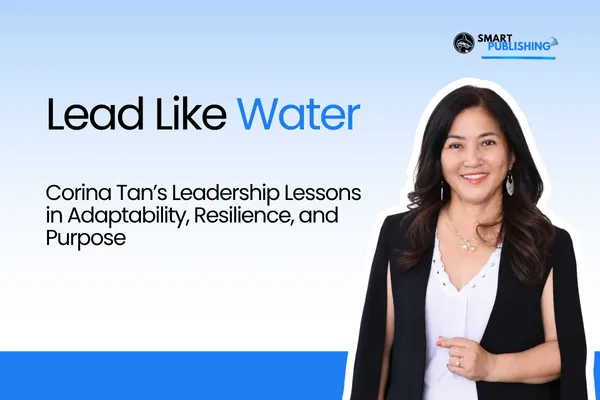
Dr. Corina Tan experienced that transition firsthand while writing Lead Like Water: From the Village to the Boardroom. After more than 35 years in executive leadership, coaching, banking, and technology, she possessed no shortage of experience to share. The challenge was never having enough material. The challenge was transforming decades of lessons into a book that would genuinely serve readers.
Her publishing journey offers valuable insights for aspiring authors because it demonstrates that writing a book is less about documenting everything you know and more about intentionally shaping your experience into a message readers can apply to their own lives.
Expertise Is Only the Starting Point
Many aspiring authors delay writing because they wonder whether they have enough experience to justify publishing a book.
Dr. Tan's story highlights a different reality.
Expertise alone does not automatically become a compelling manuscript. Like many first-time authors, she had accumulated decades of leadership experience before seriously pursuing a book. Throughout her career, she held executive leadership roles, coached leaders around the world, and developed practical insights through years of leading teams across multiple industries. Those experiences provided an abundance of material, yet they still required thoughtful organization before they could become a meaningful reading experience.
This is one of the first lessons many authors discover during the publishing process.
Writing a book is not an exercise in documenting everything you know. Readers benefit far more from a carefully curated journey than from an encyclopedia of information. The author's role is to determine which lessons belong, which stories reinforce those lessons, and how each chapter builds naturally toward the next.
Every Book Needs a Central Idea
One of the strongest decisions Dr. Tan made was identifying a single concept capable of tying her entire career together.
For her, that concept became water.
Throughout the interview, she explained that water adapts to changing environments while remaining true to its nature. It continues moving around obstacles, adjusts to different circumstances, and quietly creates lasting impact over time. Those characteristics became the organizing metaphor for her leadership philosophy and ultimately the foundation of Lead Like Water.
Finding that central theme made countless writing decisions easier.
Rather than asking whether a story was interesting, she could ask whether it reinforced the larger message of the book.
This illustrates an important principle for aspiring authors.
Strong nonfiction books rarely consist of unrelated chapters gathered under one title. They are unified by a central promise that guides every story, lesson, and example the author includes.
Personal Stories Give Ideas Credibility
One of the questions many nonfiction authors wrestle with is how much of their personal story belongs in the book.
Dr. Tan's manuscript provides an excellent example of balance.
The book opens with her childhood in a small Malaysian village, where she experienced financial hardship, sold homemade rice cakes alongside her family, and eventually left home with very limited resources to pursue new opportunities. Those experiences are not included simply because they are interesting biographical details. They establish the foundation for the leadership principles readers encounter throughout the rest of the book.
Readers learn about resilience because they first understand where that resilience was developed.
They learn about adaptability because they see how those qualities emerged through lived experience.
For aspiring authors, this demonstrates that stories work best when they support the larger message rather than interrupt it. Personal experiences become powerful teaching tools when they help readers understand why a particular lesson matters.
Writing Often Reveals the Book's True Audience
Like many authors, Dr. Tan began writing with one audience in mind.
As the manuscript evolved, however, she recognized that the lessons extended well beyond corporate executives. The principles of resilience, adaptability, humility, and continuous learning applied to entrepreneurs, managers, educators, parents, and anyone seeking to lead with greater purpose.
This evolution is remarkably common.
Authors frequently discover their audience more clearly during the writing process than before it begins.
Early drafts help clarify which stories resonate most strongly, what questions readers are likely to ask, and which ideas deserve greater attention. By the time the manuscript reaches its final form, the audience often feels much more clearly defined than it did at the outset.
Every Author Encounters Self-Doubt
One of the most encouraging moments during the conversation came when Dr. Tan admitted she questioned whether anyone would want to read her story.
Those feelings surprise many first-time authors because they assume accomplished professionals write with complete confidence.
The reality is quite different.
Self-doubt appears in publishing regardless of experience, credentials, or career success.
What allowed Dr. Tan to move forward was a shift in perspective. Rather than evaluating the manuscript through the lens of her own accomplishments, she focused on whether the book would help readers navigate their own leadership journeys. That change redirected her attention toward service rather than self-evaluation, allowing the writing process to move forward with greater clarity.
Many authors experience a similar breakthrough.
The question gradually changes from "Will people like my book?" to "Will this book help someone?"
That shift often makes writing significantly easier.
Publishing Requires Learning an Entirely New Process
Writing the manuscript represented only one stage of Dr. Tan's journey.
Like many first-time authors, she soon discovered that publishing introduces an entirely different set of considerations.
Cover development, editorial revisions, chapter sequencing, launch planning, marketing strategy, audiobook production, podcast interviews, and positioning all became part of the broader publishing experience. Each stage required decisions that extended far beyond writing itself.
Many aspiring authors underestimate this portion of the journey.
Finishing the manuscript feels like crossing the finish line.
In reality, it marks the transition into the production and launch phases of publishing.
Understanding this early helps authors approach the process with realistic expectations and appreciate the value of working alongside experienced publishing professionals.
A Book Continues Creating Opportunities Long After It Is Written
Throughout the interview, Dr. Tan spoke about the future impact she hopes the book will create.
While Lead Like Water certainly shares leadership principles, it also supports a much broader mission involving executive coaching, leadership development, keynote speaking, and preparing organizations for an AI-driven future.
This reflects one of the central ideas discussed repeatedly throughout the Smart Publishing Impact Series.
A well-positioned nonfiction book is rarely the final destination.
It becomes an introduction.
Books help readers understand an author's philosophy, establish credibility, build trust, and create opportunities that extend well beyond book sales. For many professionals, the greatest return comes through relationships, speaking engagements, consulting opportunities, and long-term authority rather than royalties alone.
Final Thoughts
Dr. Corina Tan's publishing journey reminds aspiring authors that writing a book is both a creative process and a process of refinement.
Years of professional experience provided the raw material for Lead Like Water, but transforming those experiences into a cohesive manuscript required thoughtful structure, honest reflection, careful storytelling, and a clear understanding of the reader's needs.
Her experience also reinforces an encouraging truth for first-time authors.
No one begins the publishing journey already knowing every step. Authors learn by writing, revising, collaborating, and gradually shaping their expertise into something readers can understand and apply.
The subject of Dr. Tan's book is leadership.
The lesson from her publishing journey is equally valuable.
Every meaningful book begins when an author decides that the knowledge they've accumulated throughout life is worth organizing into a message that can serve someone else. From that point forward, each chapter becomes another step toward creating a resource capable of making an impact long after the final page is written.
Until next time—
Keep writing your story, because the world needs your voice.
—Renée

